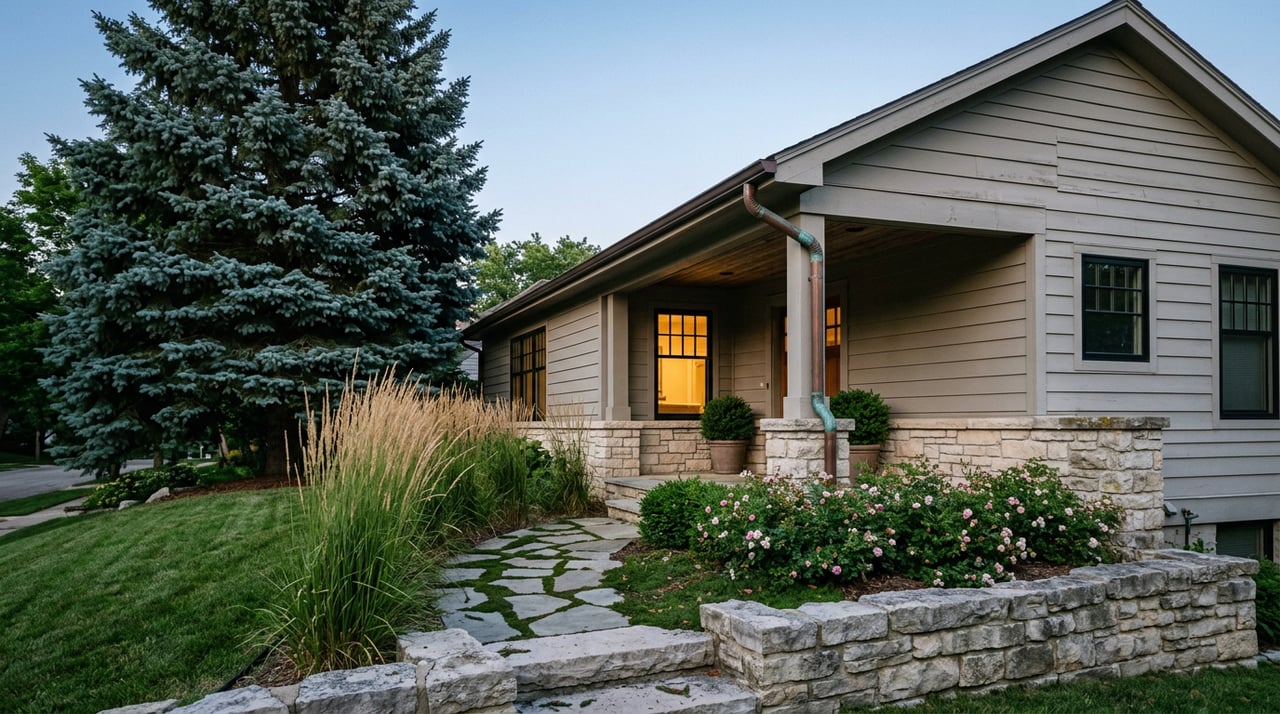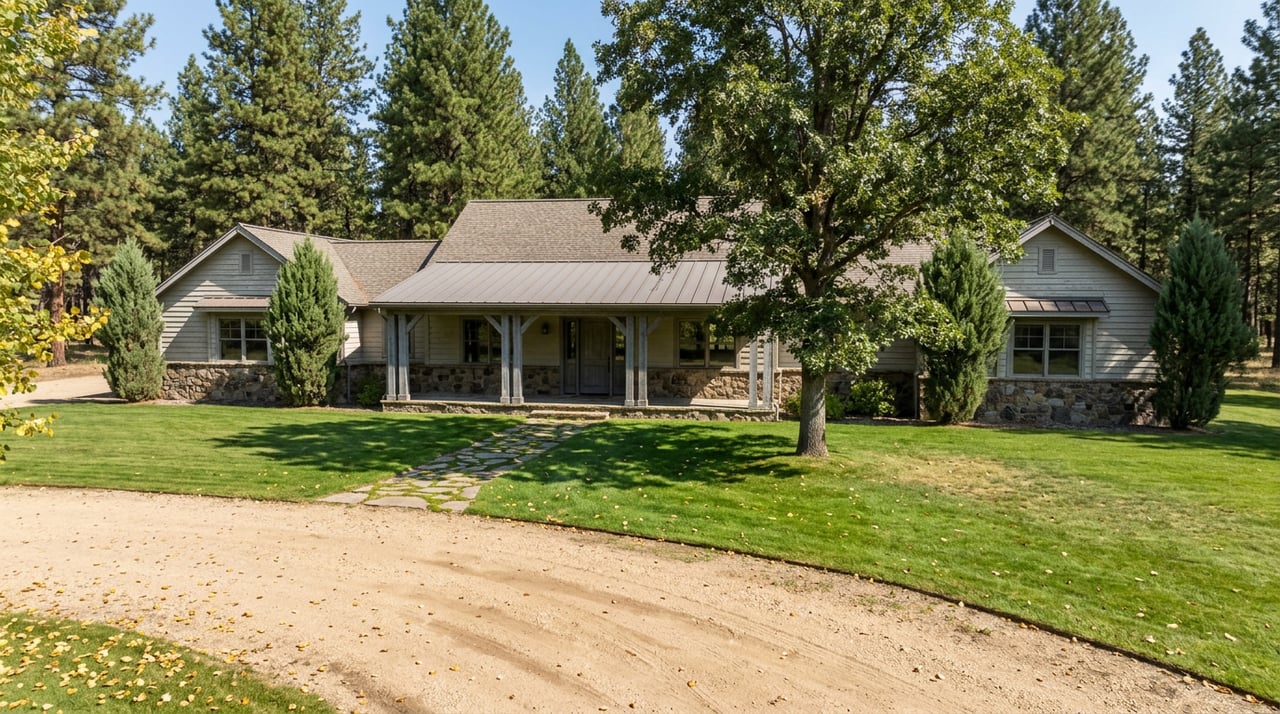
Picture two listings half a mile apart on the same stretch of road east of Niwot's Old Town. One sits on a third of an acre in a 1990s subdivision, ties into the Niwot Sanitation District, and draws water from Left Hand Water District pipes. The other sits on two acres with mature cottonwoods, a long gravel driveway, and the kind of privacy that photographs beautifully for a listing video. The second one is also, quietly, the harder close.
That is not because the bigger lot has more problems. It is because the bigger lot is far more likely to run on a private well and septic system, and in Boulder County, a septic system triggers a legal requirement that has nothing to do with square footage or list price and everything to do with what is buried in the yard.
No Town Hall, One County Health Department
Niwot is not an incorporated town. It is a census-designated place inside unincorporated Boulder County, which means there is no mayor's office or town council setting local rules. The Boulder County Commissioners handle zoning and land use for the entire area, and that single fact explains why utility service in Niwot looks less like a neighborhood pattern and more like a patchwork stitched together parcel by parcel.
Most homes closer to the village core draw water from Left Hand Water District, a public supplier held to EPA and Colorado Department of Public Health and Environment standards. Sewer service in that same core often comes from the Niwot Sanitation District, which treats wastewater for 2,346 homes and businesses across about seven square miles of gravity-fed line, according to the district's own reporting. Move out toward the larger parcels on the edges of town and that municipal-style setup gives way to private wells and septic systems, sometimes on the same road, sometimes on the same block.
One Village, Two Utility Realities
The split matters because Boulder County treats these two situations completely differently at the point of sale. Here is the shorthand version.
| Village core / smaller subdivision lots | Larger, rural-flavored parcels | |
|---|---|---|
| Typical water source | Left Hand Water District | Left Hand Water District or private well |
| Typical sewer | Niwot Sanitation District | Private septic (OWTS) |
| County inspection required at sale? | Usually no, if connected to sanitation district | Yes, unless the system was installed and approved within the last five years |
| Closing timeline risk | Standard | Depends on inspection results and how early it was scheduled |
That last row is the whole point. A home on district sewer closes the way most Front Range transactions close. A home on septic closes the way Boulder County's Board of Health decided it should close back in 2008, when it adopted a property transfer regulation specifically to catch failing systems before they change hands.
The Certificate That Has to Exist Before You Can Close
Under that regulation, Boulder County Public Health requires a Property Transfer Certificate for most home sales where the dwelling is served by a septic system, and the certificate has to be in hand before closing, not after. An inspection is required if any part of the onsite wastewater treatment system, commonly shortened to OWTS, is more than five years old. Systems installed and given final county approval within the past five years are exempt, which is a detail worth confirming with paperwork rather than assuming based on a seller's memory.
The inspection itself is a four-page report covering the tank, baffles, effluent filter, and leach field, completed by a licensed inspector and submitted to the county through its SepticSmart program. If everything passes, the seller applies for the certificate and the sale proceeds on a normal timeline. If it does not pass, the deal does not automatically die. Boulder County allows a Conditional Property Transfer, where the buyer signs a notarized Agreement to Repair, giving them 365 days after closing to fix the system, or up to two years if the plan is to connect to municipal sewer instead of repairing the septic system in place.
That flexibility is useful, but it changes the shape of the negotiation. A buyer taking on repair responsibility is effectively pricing in a known future cost. A septic replacement in Colorado can run $20,000 or more depending on soil conditions and system type, based on figures from a Boulder County septic contractor who performs these inspections regularly. That is not a number either side wants to discover the week before closing.
Why the Acreage Appeal Cuts Both Ways
The larger lots that make Niwot's estate and semi-rural properties attractive are the same lots most likely to carry this requirement, and the connection runs deeper than the sale itself. A property management firm that services Left Hand Valley estates documented a case where a well pump failed on a Niwot-area property and the owner did not find out until arriving for a weekend visit, leaving the house without water. The same firm notes that septic tanks on these properties typically need pumping every two to four years, which is routine maintenance rather than an emergency, but only if someone is tracking it.
That is the trade a buyer is actually making when they choose the two-acre lot over the subdivision home. The privacy and the mature trees come bundled with an infrastructure relationship that requires more active management, and at resale, that same infrastructure becomes the thing standing between an accepted offer and a closed transaction. It is not a flaw in the property. It is simply what "well and septic" means in practice, on the day you sell and every day before that.
Reading a Listing Like Someone Who Already Knows This
The difference shows up in how a well-prepared listing reads. One recent listing a few miles east of Niwot, in the same unincorporated stretch of the county, spelled out exactly what a buyer wants to see: domestic water supplied by Left Hand Water District, a well available separately for outdoor irrigation, and language confirming the septic system had already been inspected and approved, with the required Boulder County Public Health Property Transfer Certificate already in place ahead of closing.
That is the tell. A seller who orders the septic inspection before listing, rather than waiting for a buyer's contingency to force the issue, has already removed the single biggest variable from the timeline. A buyer evaluating two comparable Niwot properties should ask the same question of both: has the septic system been inspected, and does the certificate exist yet? The answer says more about how smoothly the sale will go than the size of the lot or the age of the house.
Buyers financing with an FHA or VA loan have a parallel checkpoint on the water side. Those loan programs typically require documentation that a private well delivers potable water free of bacteria and other contaminants, so a fresh water test protects the closing date just as much as the septic certificate does.
A Few Questions Worth Asking Directly
Does every home in Niwot run on well and septic? No. Homes closer to Old Town and in established subdivisions typically connect to Left Hand Water District and the Niwot Sanitation District. Larger, rural-flavored parcels are the ones more likely to run on a private well and septic system, but this varies address by address rather than by neighborhood name.
If our septic system is only a few years old, do we still need an inspection? Not necessarily. Boulder County exempts systems installed and given final approval within the past five years, but that exemption depends on having the paperwork to prove it, so it is worth confirming with county records rather than relying on memory.
What happens if the system fails inspection after we are already under contract? The sale does not have to fall apart. Boulder County allows a Conditional Property Transfer, where the buyer signs a notarized Agreement to Repair and takes on 365 days after closing to fix the system, or up to two years if the plan is to connect to municipal sewer instead.
If you are weighing a Niwot property, whether it is a village home on district utilities or a larger parcel with a well and septic system, the utility question is one of the first things worth verifying before you fall in love with the lot. The Niwot Group has spent years walking these exact parcels with buyers and sellers, and we are glad to help you sort out what a specific address actually includes. Get your free home valuation and let's start with the facts on the ground, not just the ones in the listing photos.