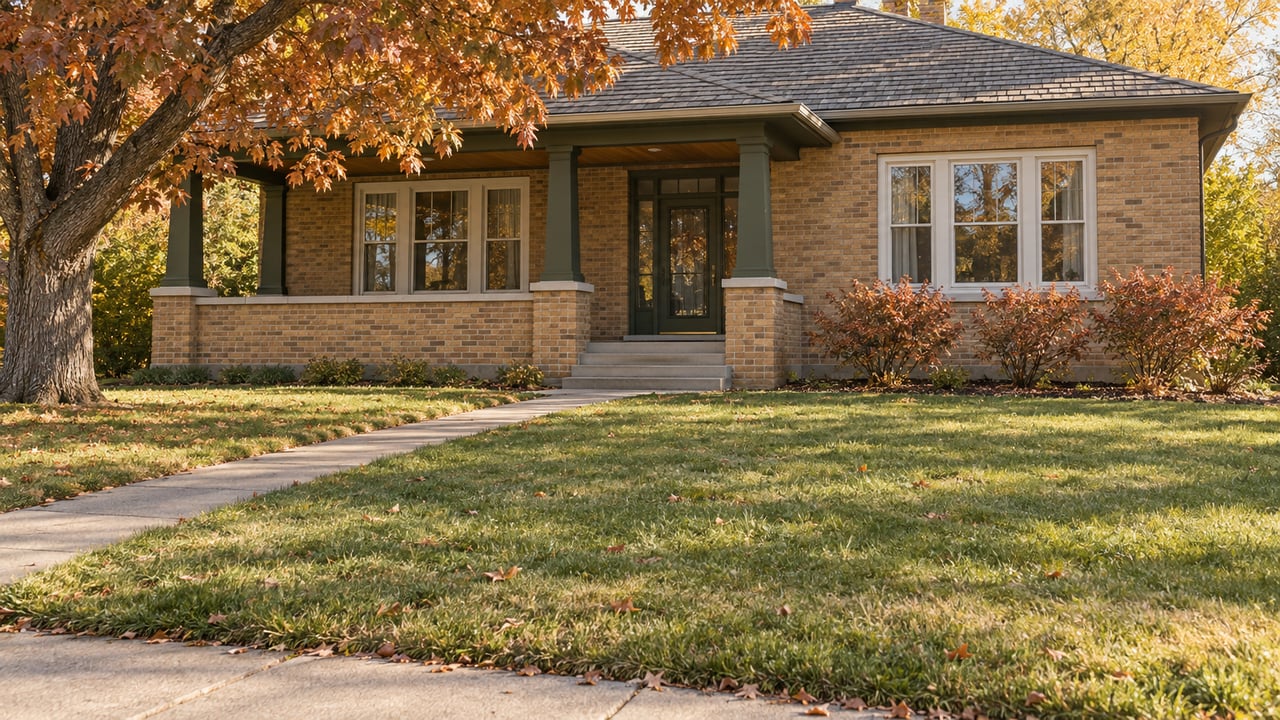
Why do so many contracts on Old Town Louisville cottages and Coal Creek Ranch ranch homes get renegotiated in the ten days after inspection, while a newly built home three blocks away sails through without a single credit request? The answer isn't the age of the house. It's a Boulder County construction rule that only looks forward, never back.
Since the county began requiring radon-resistant construction in new single-family homes, every house built to that standard in the City of Louisville has come with a passive mitigation system baked into the foundation before the first buyer ever walks through. Older homes never got that requirement, because it didn't exist yet when they were built. That's the divide sellers in Louisville's historic core need to understand before they list: the newest homes in town are legally required not to have the exact problem that shows up, uninvited, in so many pre-2000 inspection reports.
The Rule That Only Protects What's Built After It
Boulder County sits in the EPA's Zone 1, the highest radon risk category the agency assigns anywhere in the country. That classification alone doesn't distinguish Louisville from Boulder, Longmont, or Lafayette. What does distinguish it is that the City of Louisville is one of the specific municipalities, alongside Erie, Superior, and unincorporated Boulder County, where new single-family construction must include a radon-resistant system as a condition of the building permit, according to Boulder County's own guidance. That system has to bring indoor radon below 4.0 picocuries per liter, and if a passive system alone isn't enough, a fan gets added and the home gets retested until it clears.
None of that applies retroactively. A century-old cottage on a numbered street in Old Town or a 1980s ranch backing up to Coal Creek Golf Course was never subject to that standard, because the standard didn't exist for most of these homes' lives. The house isn't unusual. The rule just wasn't written yet when it was built. That gap is exactly why a radon test, run early and on the seller's own schedule, does more for a listing than almost any other single pre-inspection step available in this price range.
What a Sewer Scope Finds Under the Older Blocks
The second gap runs underground. Homes from the era that built out North Louisville and the earlier phases of Coal Creek Ranch, roughly the 1970s through the early 1990s, were plumbed with clay or cast-iron sewer lines as a matter of course. Decades of tree roots, ground movement, and simple corrosion are hard on both materials in ways a walk-through inspection can't see. A standard home inspection doesn't include a scope of the line running from the house to the street, which is exactly why buyers in this market routinely add one during the inspection window.
The scope itself is a modest expense. What it finds is not. A cracked joint or a belly in an aging clay line is a repair that can run from a few thousand dollars into the tens of thousands, depending on whether the fix is a spot repair or a full replacement. For a seller, the useful move isn't hoping the buyer skips the scope. It's ordering one before the home hits the market, so the number is known and priced in rather than discovered during the objection period when it has the most leverage against you.
The Wiring Nobody Mentions Until Someone Asks About Insurance
The same construction era that left Louisville with clay sewer lines also left a subset of homes with electrical systems that read very differently to an inspector than they do to a homeowner who's lived comfortably with them for twenty years. Aluminum wiring was common practice in parts of the 1960s and 1970s. Panels branded Federal Pacific or Zinsco turn up in homes from the same stretch, and both brands carry a reputation among inspectors and insurers as fire-risk hardware, not just dated equipment.
The complication isn't cosmetic. Several insurers decline to write a policy on a home with one of these panels still in place, which means the issue can surface not in the inspection report itself but in a buyer's financing and insurance process weeks later, at a point in the transaction where nobody wants a new surprise. A panel upgrade is a bounded cost. Finding out about the panel after the buyer's insurer already declined coverage is not.
Old Town Carries a Second Rulebook
Everything above applies anywhere in Louisville's older housing stock. Old Town carries one more layer that Coal Creek Ranch and the newer developments around DELO don't. The city's historic preservation program covers more than 69 designated landmark properties, and any exterior change to one of them, from a new porch railing to a window swap, requires an alteration certificate before a permit gets pulled. Separately, any structure over fifty years old anywhere in the district triggers a demolition review if a project would remove more than half the building or touch the street-facing side, landmarked or not.
That second rule catches people who never thought of their house as historic in the first place. It just happens to be old, which in Old Town is enough. A buyer who tours a charming 1920s bungalow with plans to add a second story or reconfigure the front elevation needs to know, before they write an offer, that the timeline for that project runs through a preservation review, not a standard permit desk. Sellers who get ahead of this, either by confirming landmark status themselves or simply flagging the fifty-year threshold in disclosures, keep that conversation from happening for the first time during a walk-through with the buyer's contractor standing in the front yard.
Reading the Market Correctly Before You List
None of this happens in a vacuum, and the current market rewards sellers who treat these issues as pre-work rather than post-inspection damage control. Over the three months ending June 2026, Louisville's median sale price ran to $959,000, up 10.9 percent from the same stretch a year earlier. At the same time, the average home took 43 days to sell, up from 37 days over that same year-ago period, and roughly the same number of homes changed hands each June.
Put those two numbers together and the picture is a market still moving upward on price but giving buyers slightly more room to negotiate than they had a year ago. That extra week and a half of market time is exactly the window in which an undisclosed radon reading, an unexpected sewer estimate, or a preservation review nobody mentioned turns into a price reduction instead of a smooth close. A seller who has already tested, scoped, and disclosed walks into that slower market with the leverage on their side. A seller who hasn't hands that leverage to the first inspector who finds the problem for them.
Before listing an older home in Louisville, it's worth having in hand:
- A current radon test, since the home almost certainly predates the county's mitigation requirement
- A sewer scope, especially for anything built before the early 2000s
- A look at the electrical panel and wiring type, particularly in homes from the 1960s through the 1970s
- Confirmation of landmark status and the fifty-year demolition review threshold for anything in Old Town
A Few Questions Sellers Ask Directly
Do I need to test for radon before I sell? Buyers in this market routinely order a radon test during their inspection window whether or not a seller has one already, and a result you didn't see coming has far less leverage attached to it than one you already know and have priced into your listing.
If my Old Town home isn't officially landmarked, does the preservation rule still apply to me? The demolition review threshold applies to any structure over fifty years old in the district, not just the formally designated landmarks, so it's worth checking your home's age and reviewing the city's alteration and demolition guidance before assuming the rule doesn't touch you.
Is a sewer scope actually necessary, or is it an upsell? For homes built before the early 2000s in this part of Boulder County, the clay and cast-iron lines common to that era make a scope one of the more useful inspection add-ons available, since it's the only way to see the condition of a line that a standard walk-through inspection never touches.
Selling an older home in Louisville isn't a liability. It's a house with a history that the newest construction in town simply hasn't had time to accumulate. The sellers who do best with that history are the ones who get ahead of what an inspector will eventually find anyway. If you're weighing a listing in Old Town or Coal Creek Ranch and want a clear read on how these specifics play into your pricing and timeline, The Niwot Group can walk through what your particular home's age and location mean for your sale, starting with a free home valuation.